I had dinner at Le Taillevent on a Monday in June 2026, and if you are deciding whether to book, the short version is this: the food is classic French cooking done properly, and the service is the reason the night feels different from other nice restaurants in Paris.
It is a two-Michelin-star dining room at 15 rue Lamennais, in the 8th, in an old mansion. You are not walking into a scene. Someone meets you, walks you to the table, and hands you the menu. After that you stop looking for anyone, because someone is already nearby.
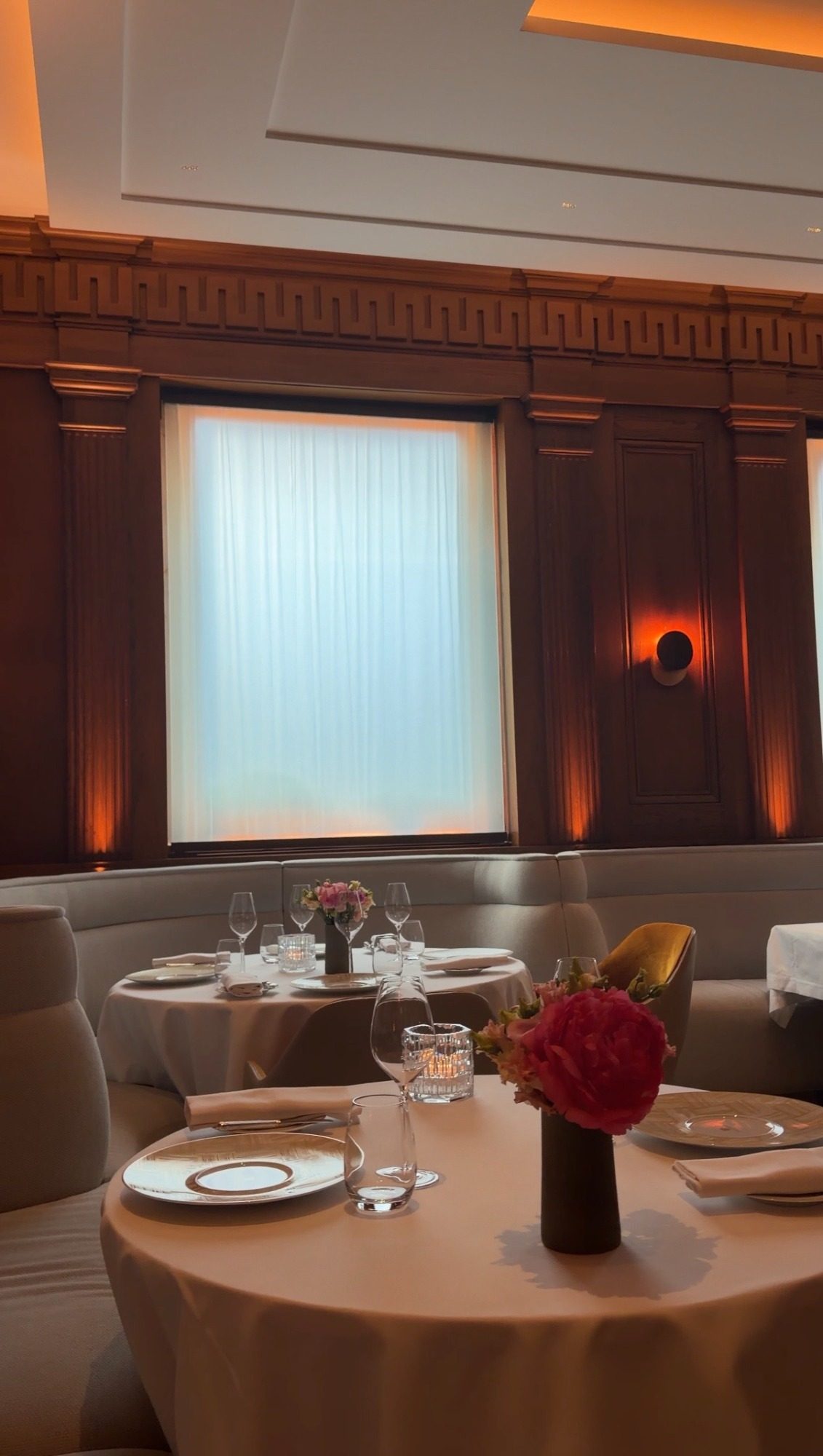
Dark wood, a Greek-key border, warm light, one tall window with a sheer curtain, white tablecloths. There was a pink peony on our table. It looks formal in photos. In the room it just feels looked after.
Le Taillevent menu and what it costs
You do not order à la carte in the usual way. They give you a few tasting menus and you pick one at the table. When we went, in the first half of 2026, the house was listing roughly these:
- Héritage du Taillevent, about €245
- A seasonal menu, about €270
- Gestes du Taillevent, about €295
- A longer menu, about €345
That is before wine. The prices move, so check the current menus when you book. 2026 is the restaurant’s 80th year, and through the end of July they also had an anniversary menu at €345: watercress with oscietra caviar, Brittany crab, spelt with frog legs, veal sweetbread in puff pastry with morels, crêpes Suzette flambéed at the table, and a chocolate marquise. Giuliano Sperandio was the chef that night. Philip Chronopoulos took over the kitchen in September 2026, so some of those plates will have changed. The way the room runs has not.
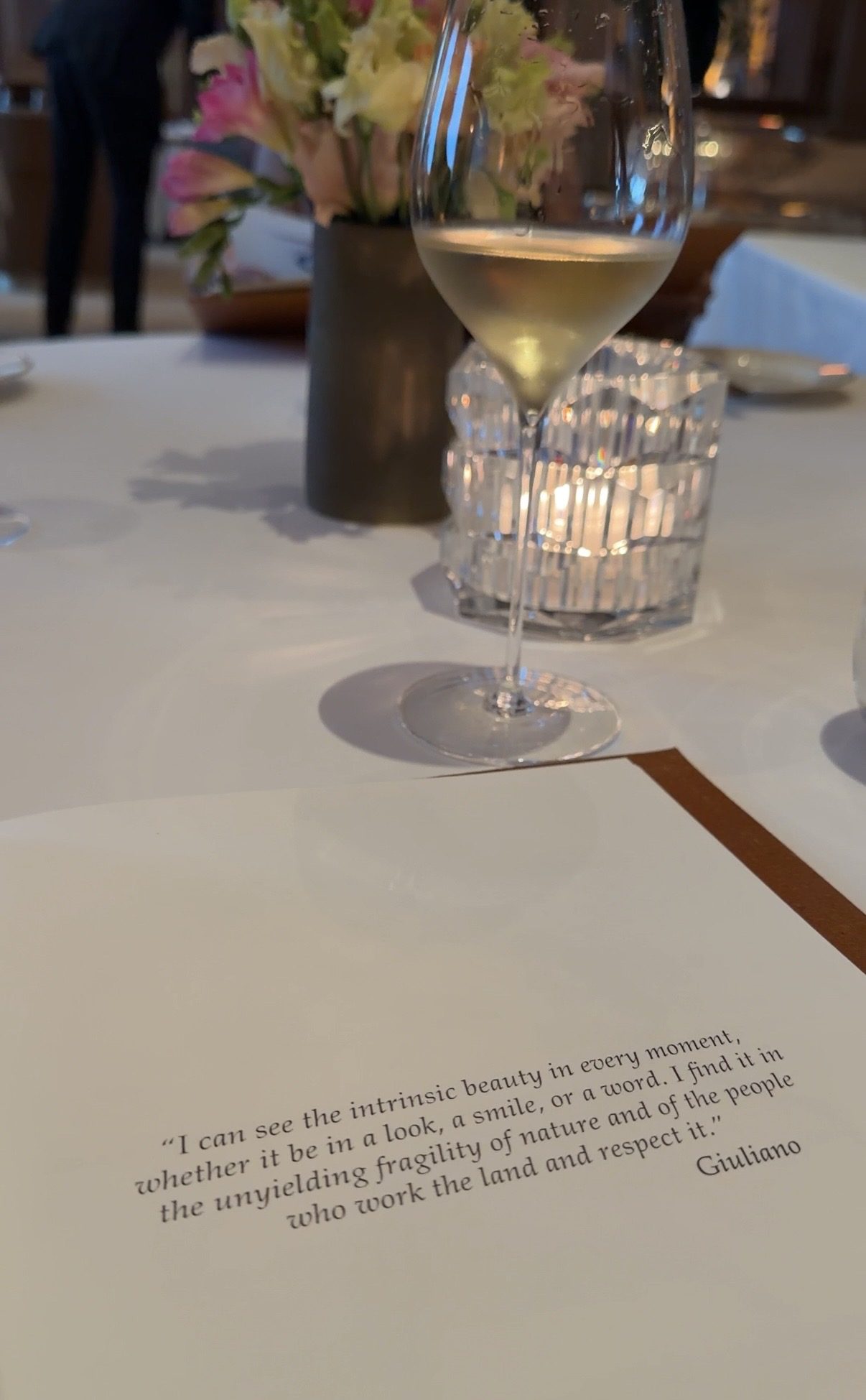
They also set down a card with a line from Giuliano, which tells you the mood of the place more than the prices do.
I have a shellfish allergy. I told them, and they did not hand me a sad edited version of the menu. Courses that would have been crab or anything else from that family were rebuilt, and the replacements were genuinely good. If this is you, say it when you reserve, not when you sit down. The phone is +33 1 44 95 15 01.
What we actually ate
I do not have the printed name for every plate. This is what came out, in the order I remember it.
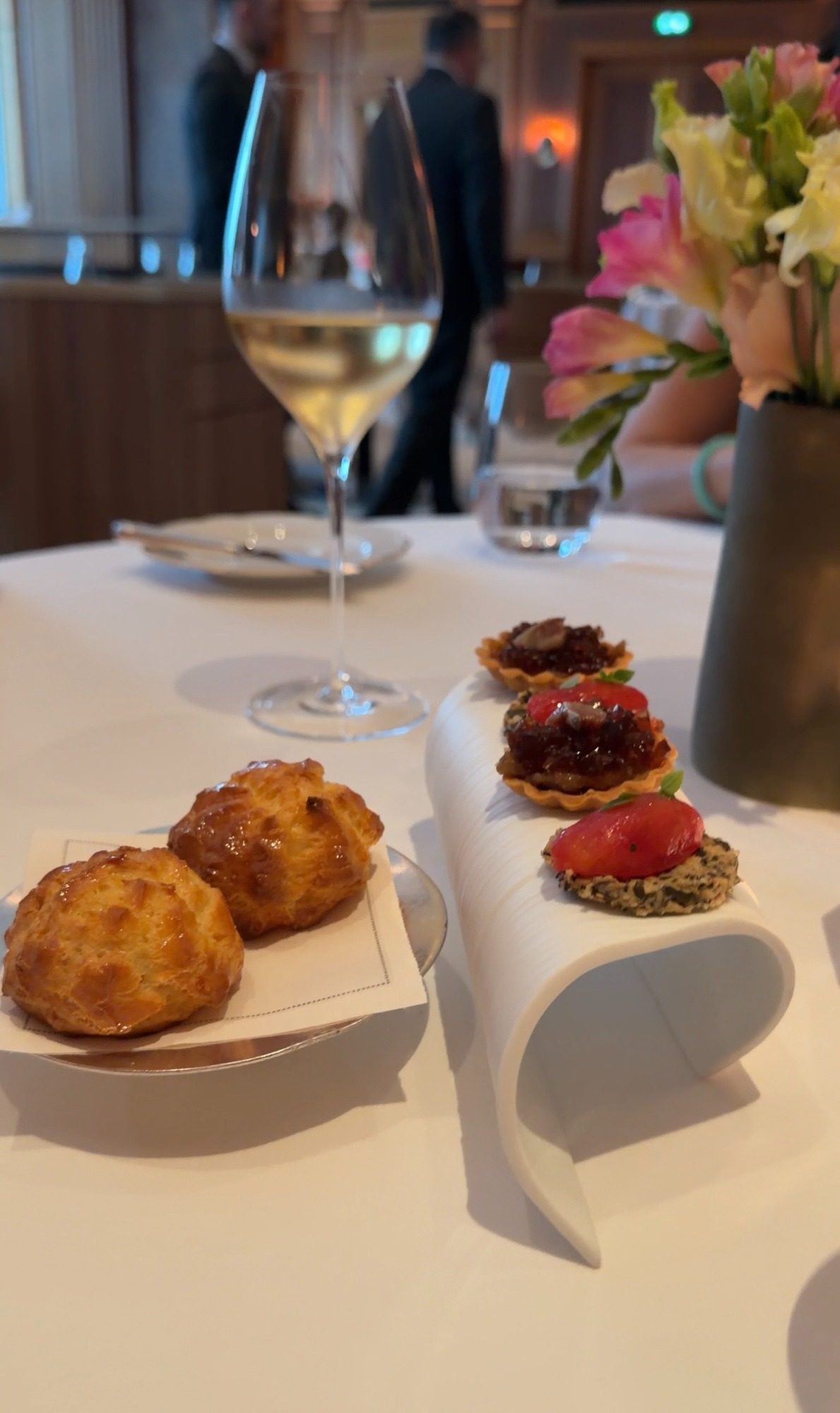
First, warm cheese gougères, two of them, glossy, on a little napkin, and three small tartlets on a curved white stand. One had tomato, one was darker and stickier, one had a seeded top. White wine was already poured. This is the part of a French meal I never want to rush.
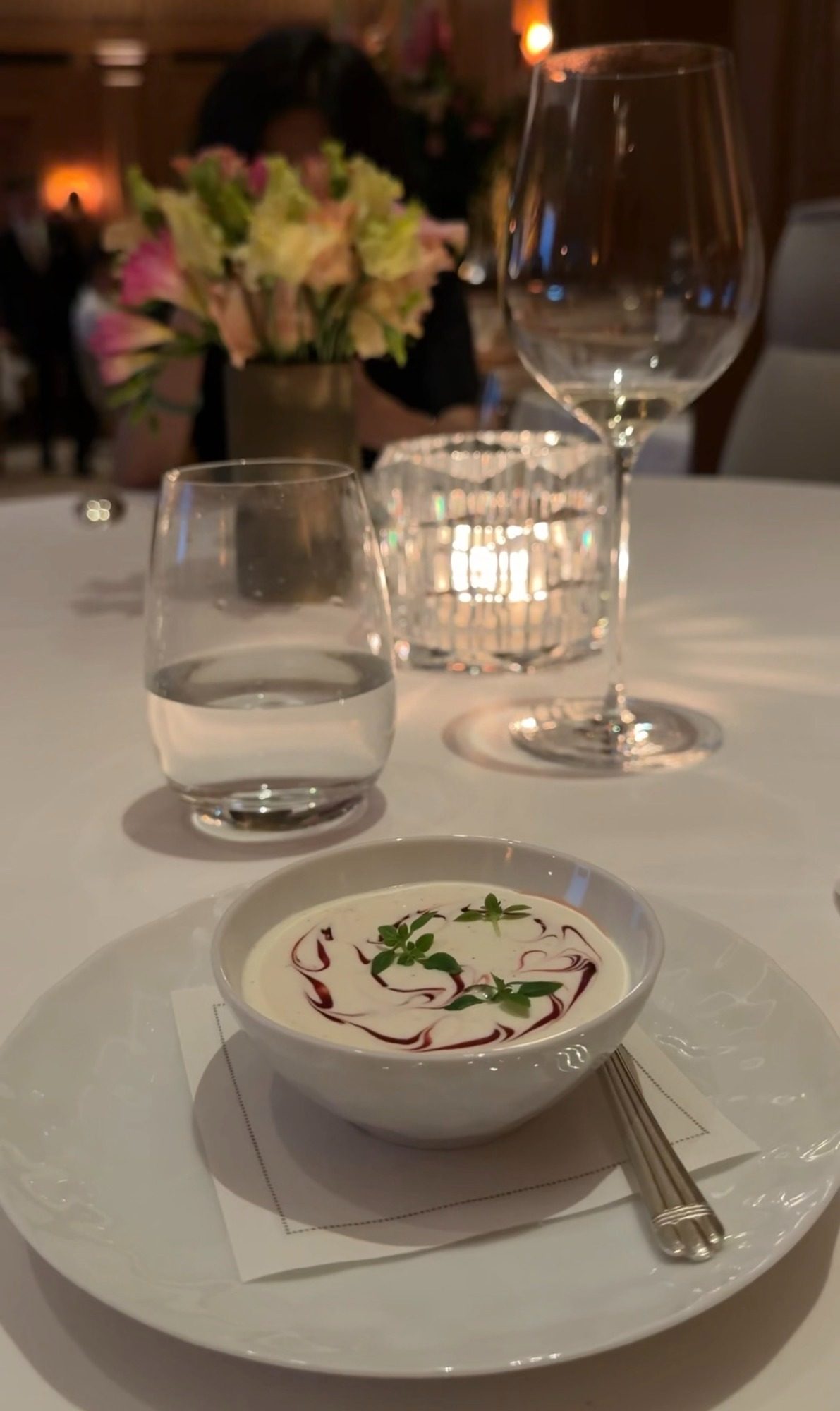
Then a small white soup in a wide bowl. Creamy, with a thin red line pulled through it and a few herbs in the middle. It was light. You eat it in about four spoonfuls and it does the job of waking the table up.
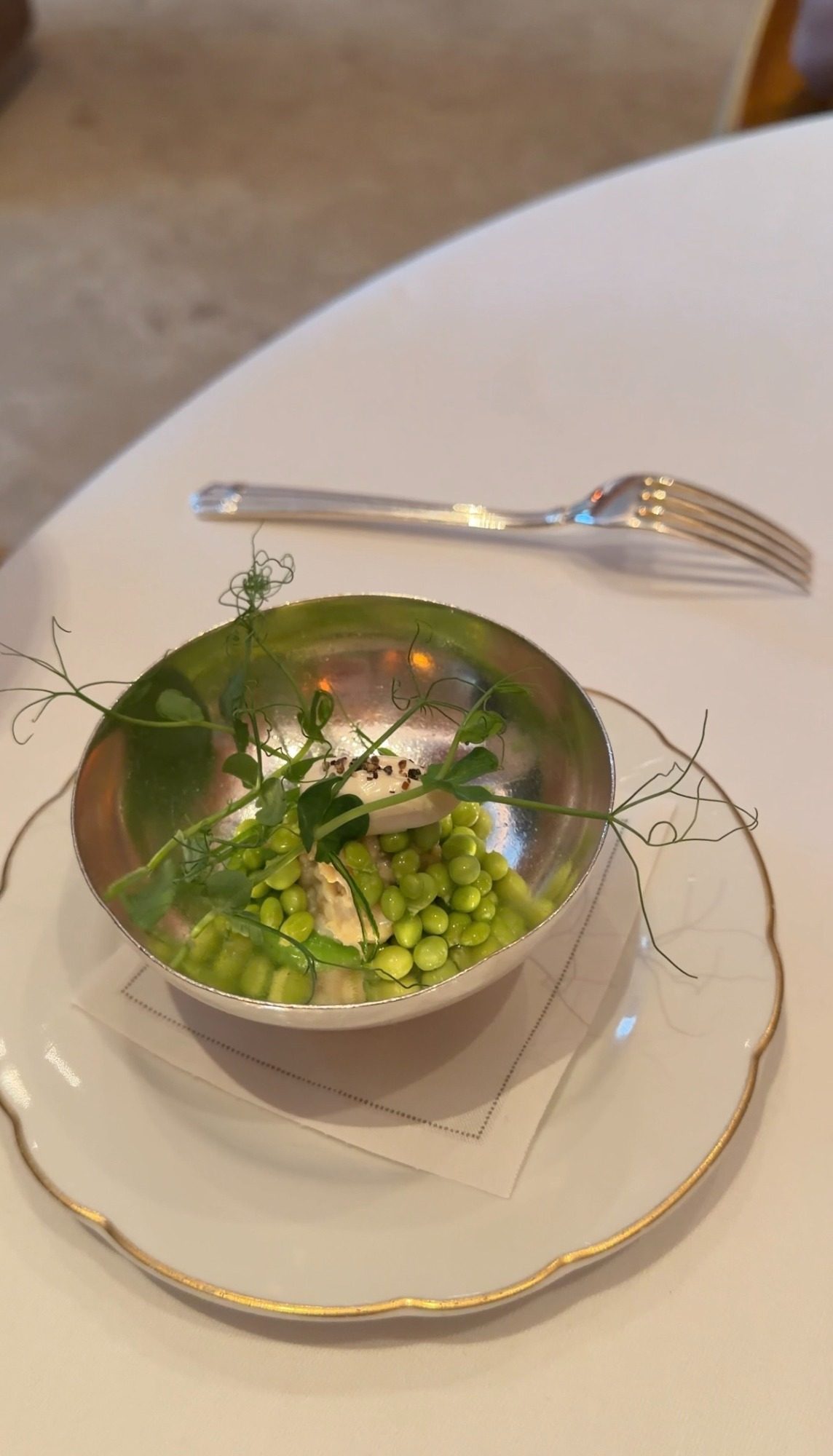
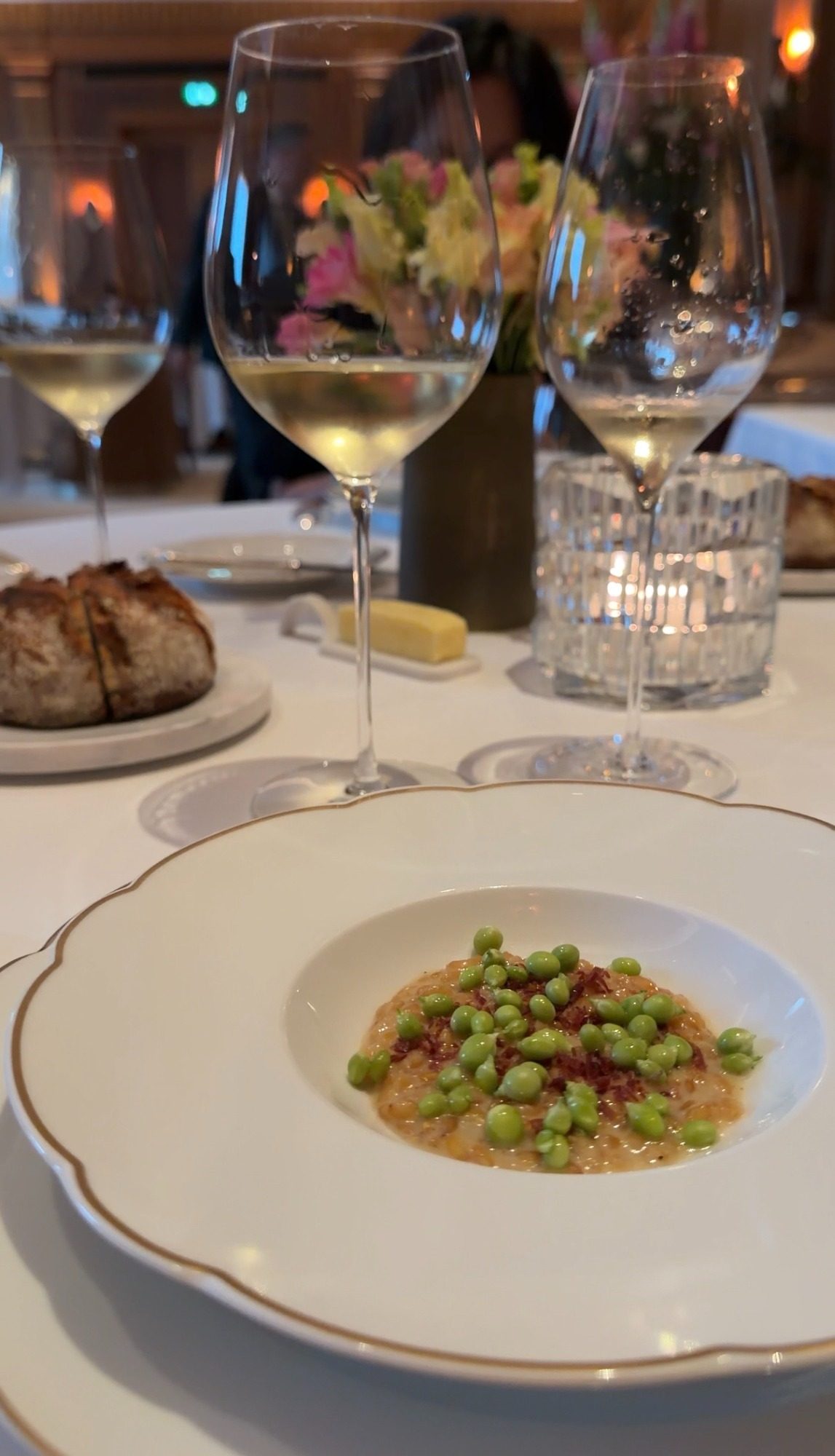
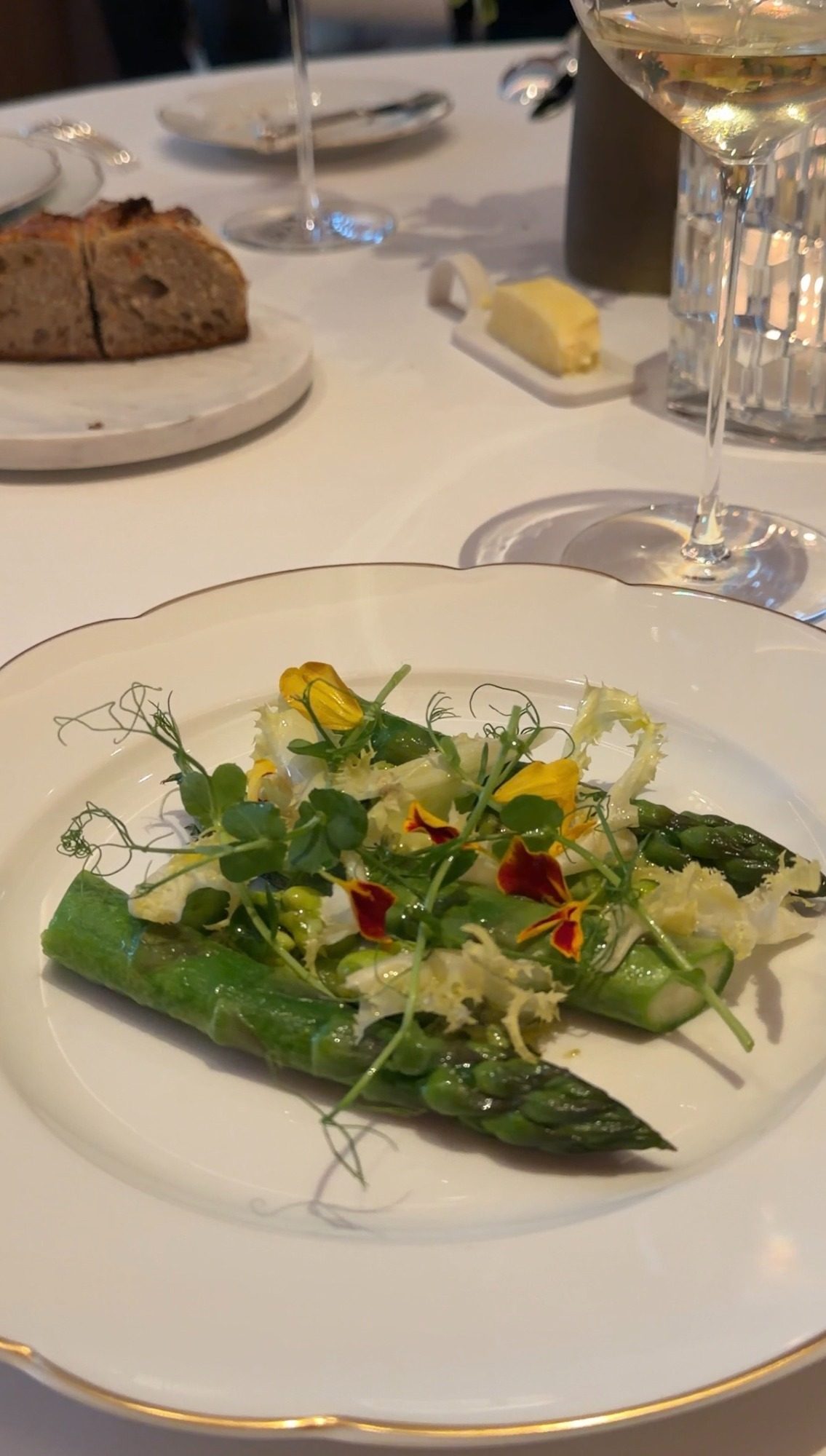
Next to that, peas, twice, which makes sense for June. One was a silver bowl of bright peas under a mess of pea shoots, with something soft and white in the center. The other was a shallow plate of peas over a soft grain or crushed base, with little red bits through it, bread and butter still on the table, and two glasses of white wine. Asparagus came as two spears under a lot of herbs and small yellow and red flowers. None of these plates were trying to be clever. They tasted like the vegetable, cooked carefully.
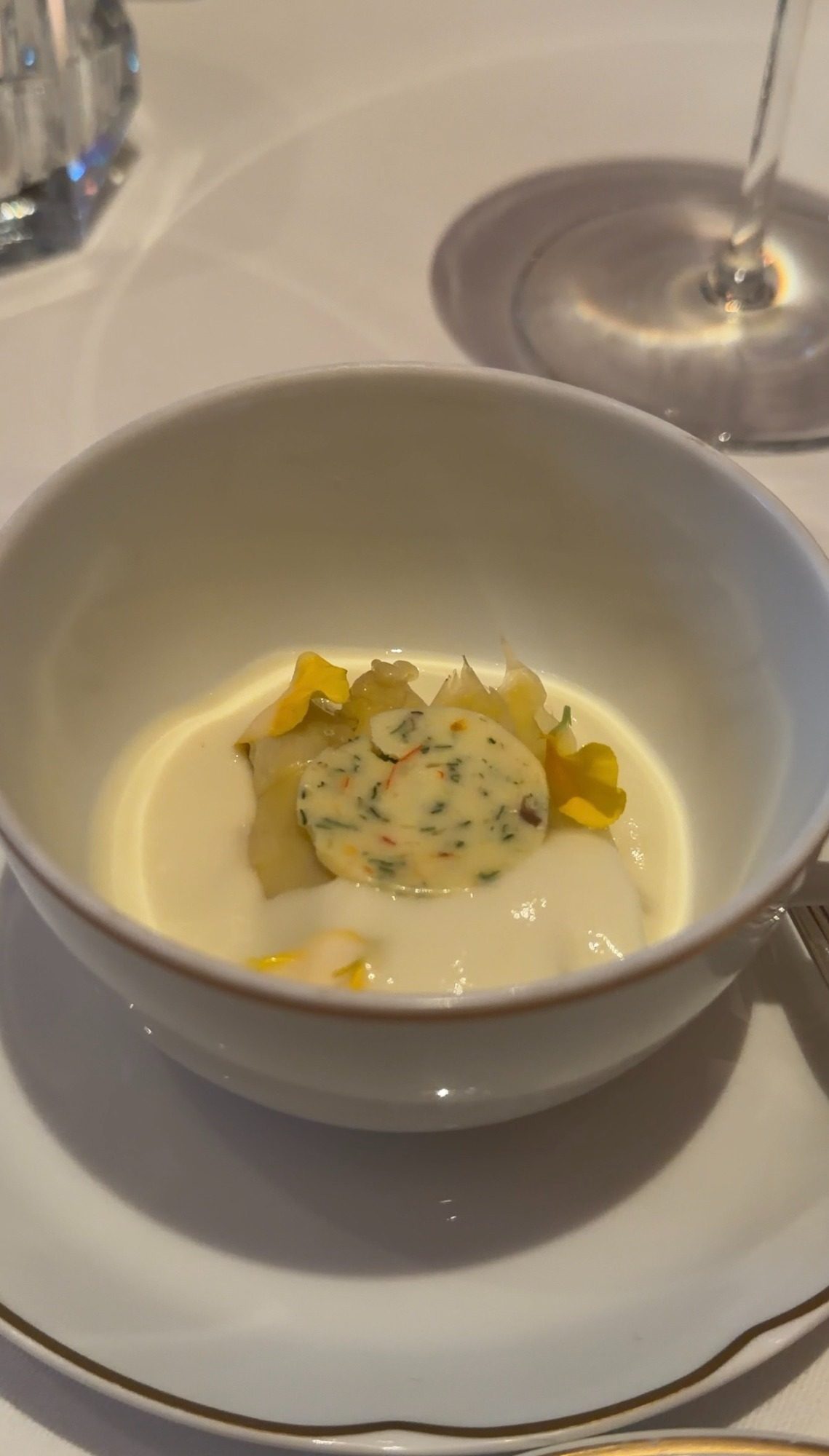
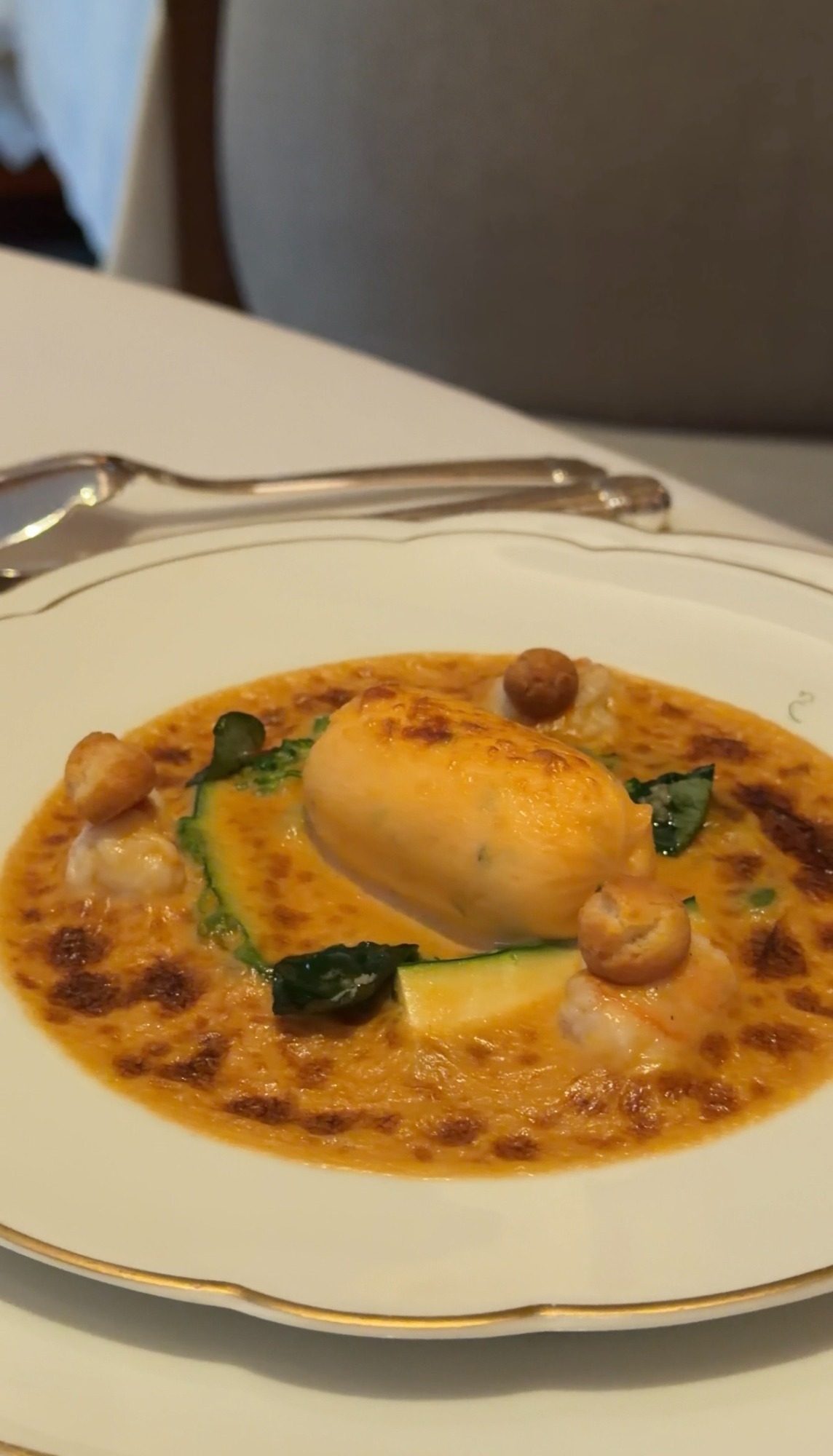
A white bowl of pale cream sauce held one round slice flecked with herbs, and a few yellow petals. After that, a deep orange sauce, a piece of zucchini, a golden center, and a few small crisps around the edge. Where a course would have been shellfish, mine was not. I did not feel like I was eating the backup option.
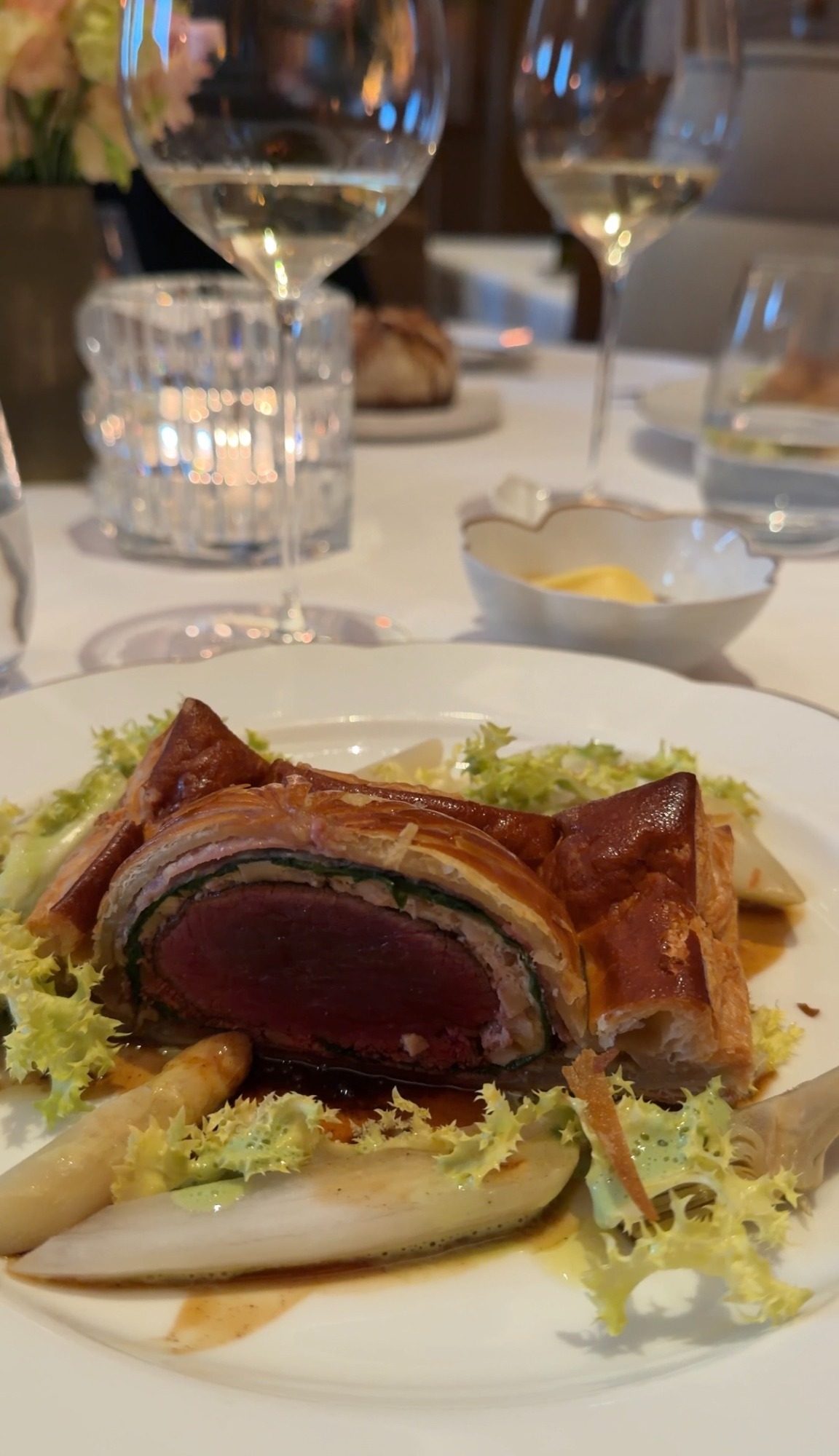
The main I remember most clearly was beef in pastry. Rare in the center, a green layer under the crust, white asparagus, frisée, and a dark sauce. It is the dish you think of when someone says old-school French dining, and it was cooked the way that dish has to be cooked or it is pointless. The pastry was crisp. The meat was not grey. I would go back for this plate alone.
Cheese, the flame, and the end
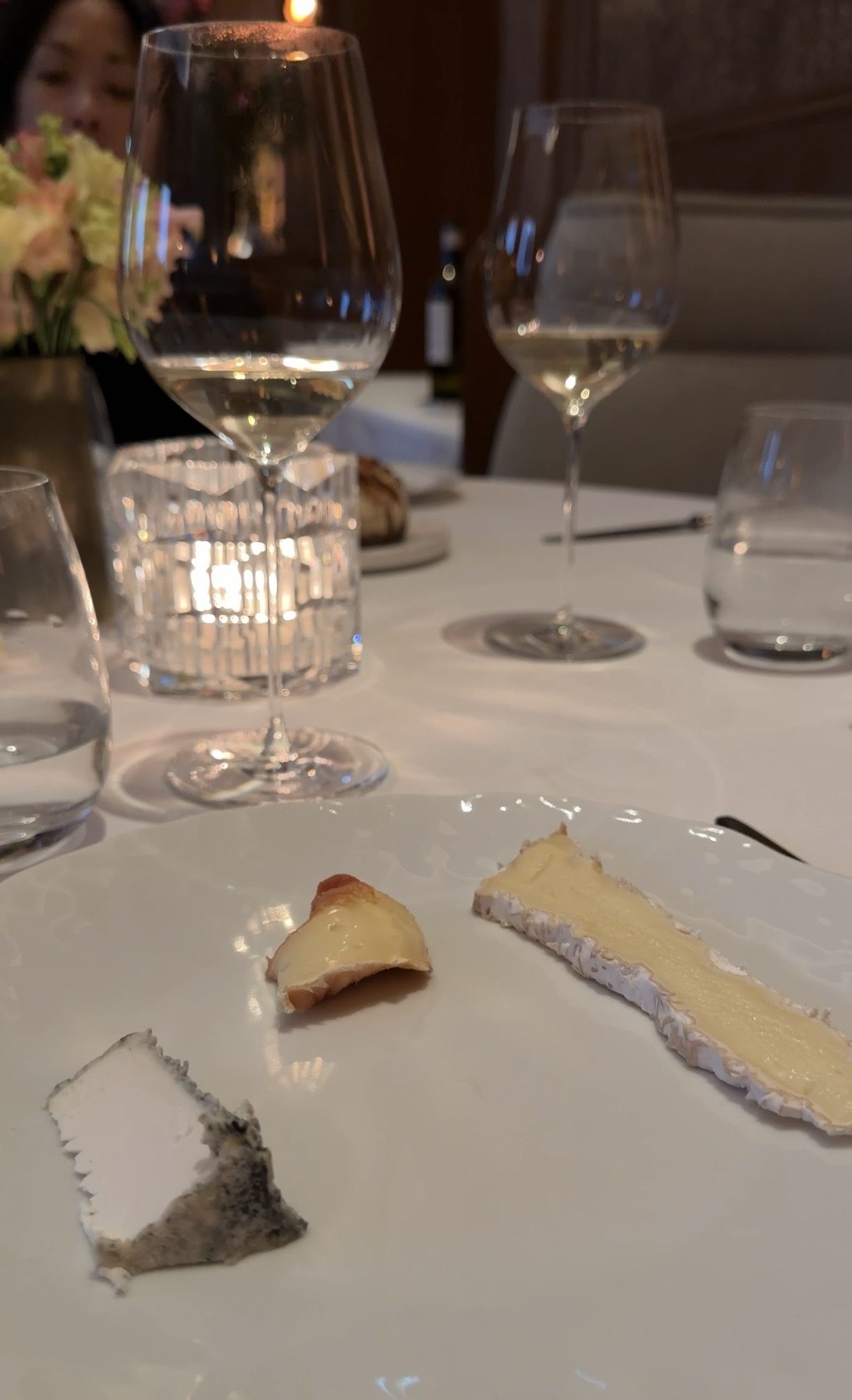
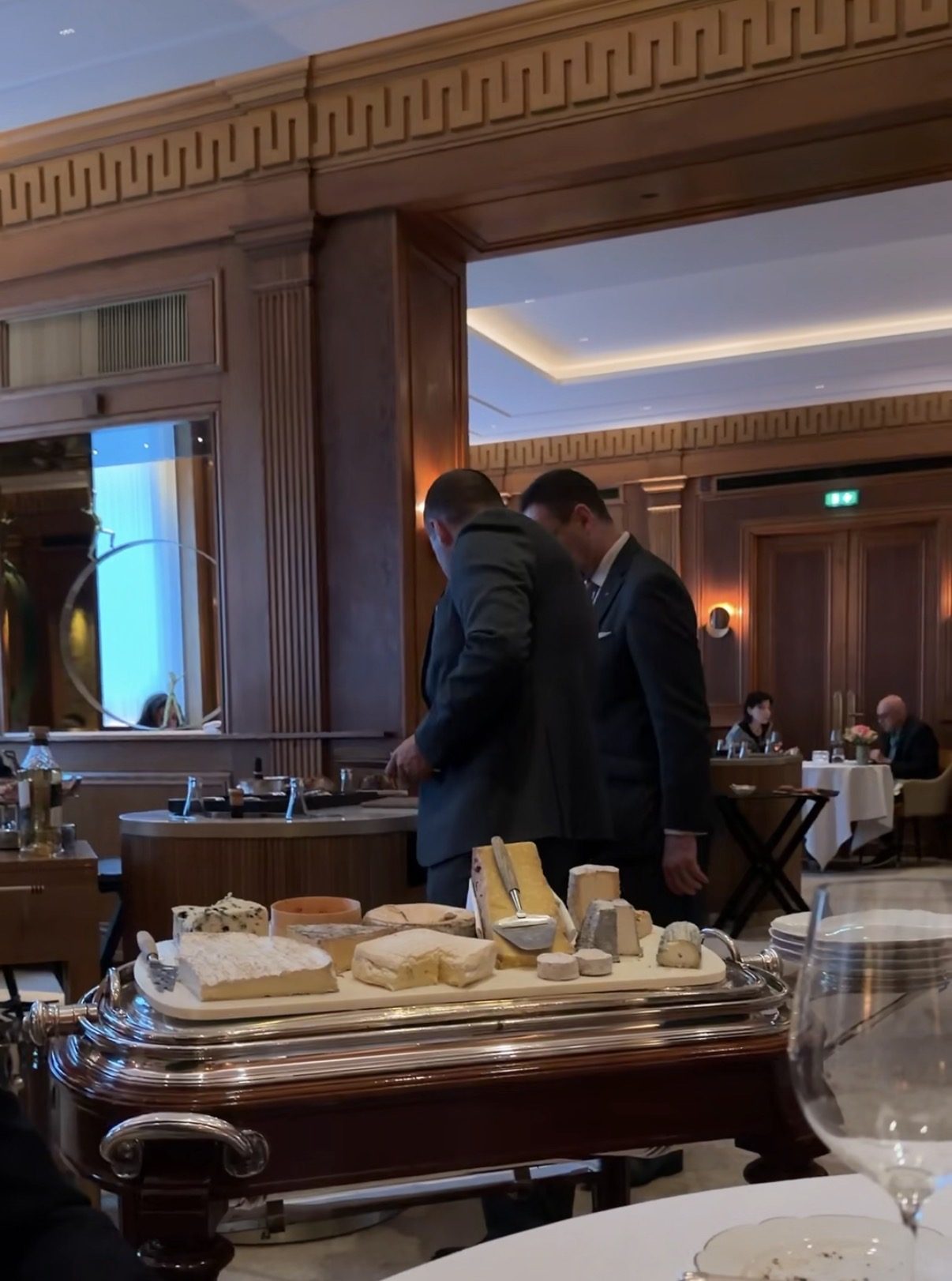
Cheese is a trolley, not a pre-plated trio someone decided for you. Two servers in suits wheel it over and cut what you point at. Ours landed as three pieces: a small wedge with a washed rind, a long slice of soft cheese with a white rind, and a chalky piece with a dark ash edge. The trolley itself is huge. Comté-style wedges, blues, goats, soft cheeses, the usual serious French selection, on a silver cart in the middle of the room.
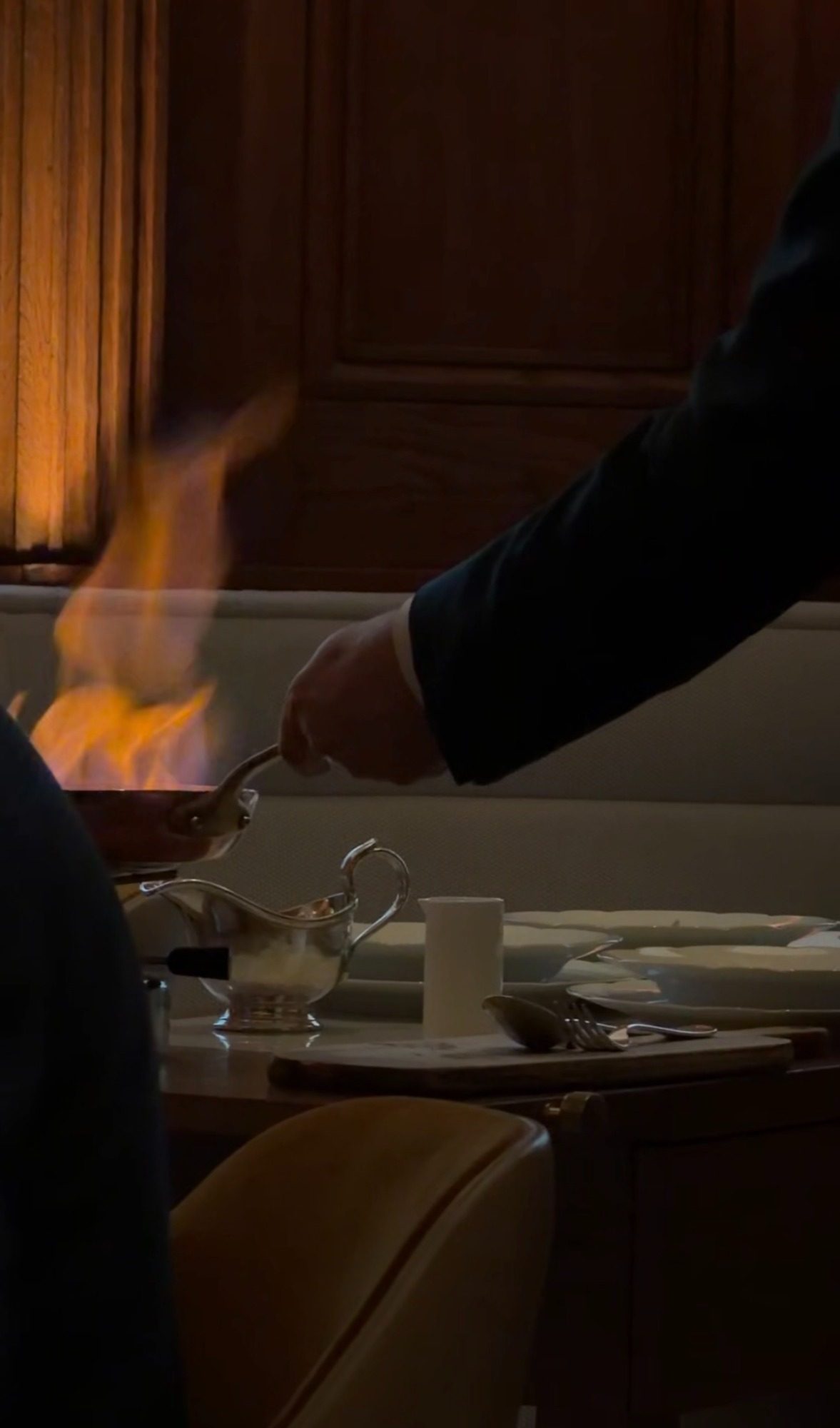
They still cook at the table. A copper pan, a real flame, a sauce boat waiting beside it. The house is known for crêpes Suzette flambéed in the room, first with Grand Marnier and then with cognac. This was that kind of service. It is close enough to the table that you feel the heat, and it is done by someone who has done it a thousand times, so it does not turn into a show.
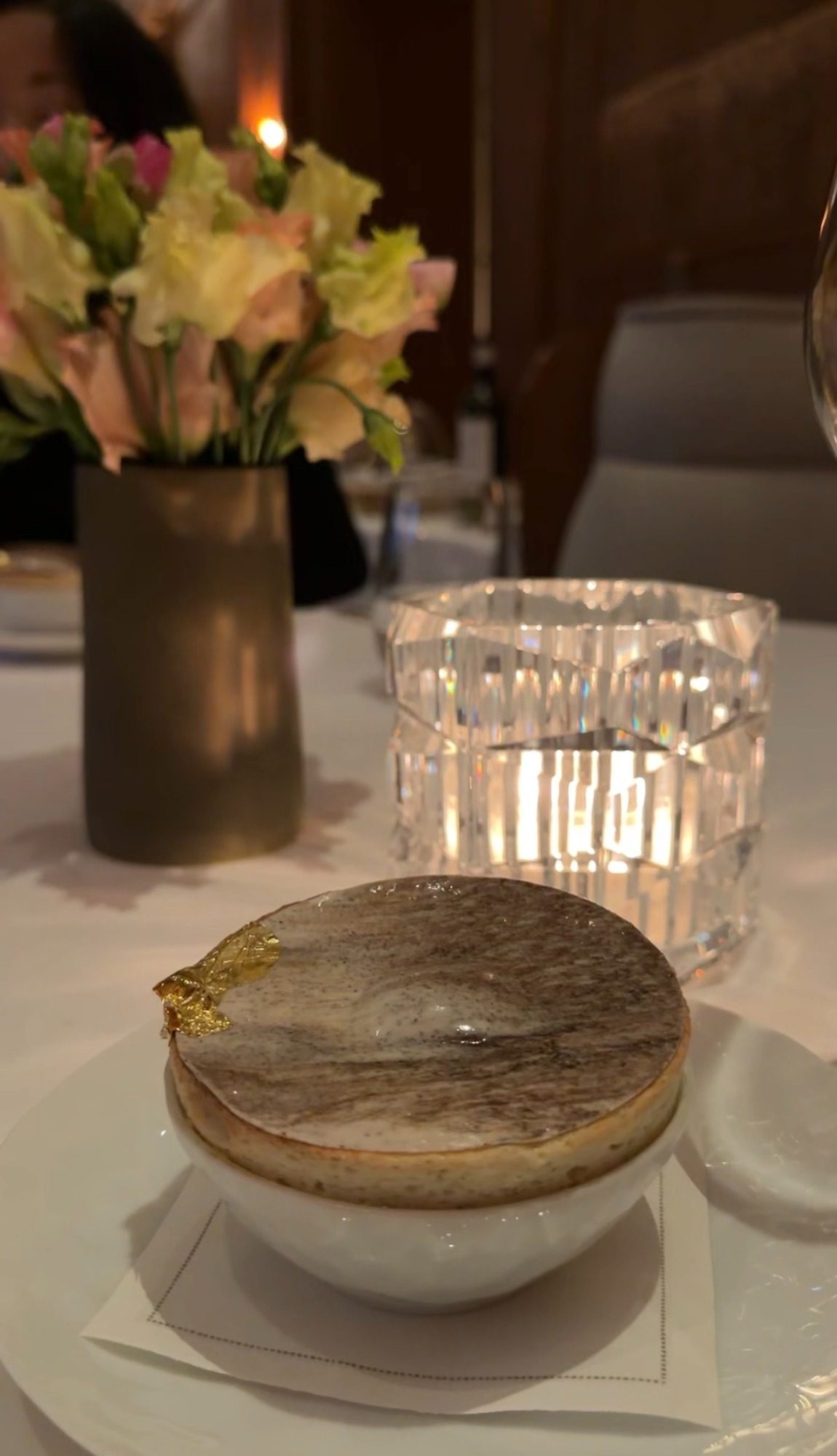
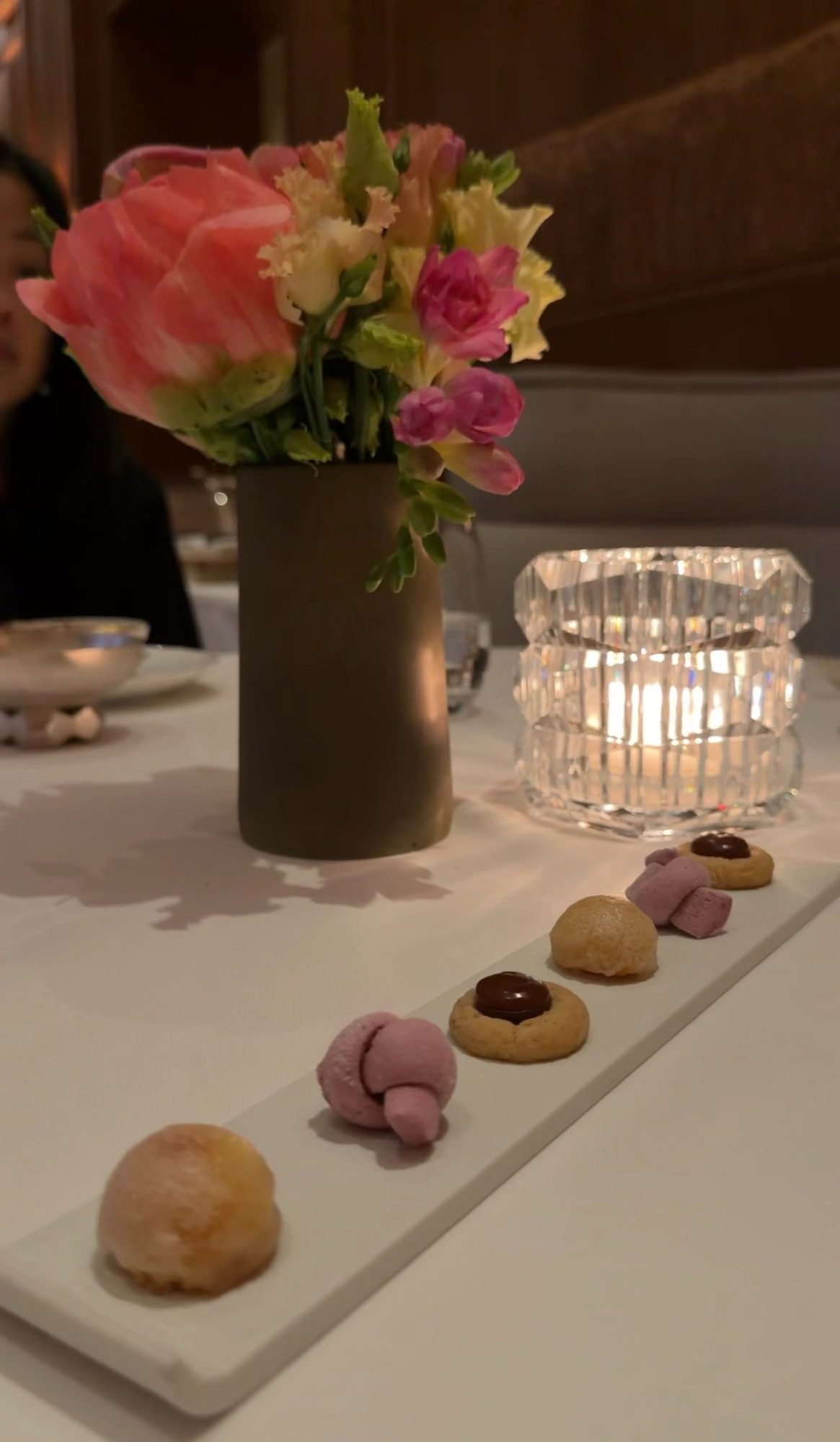
Dessert after that was a baked top in a white bowl, browned, with a piece of gold leaf on it, and the cut-glass candle still going. Then a long rectangular plate of petit fours: a sugar-dusted choux, a pink bite, a pale cookie with a dark chocolate center, and another pink one at the far end. The flowers stayed on the table the whole time.
It was my birthday. They brought a little something extra at the end. Nobody sang, which I was glad about. You do not need that here.
Is Le Taillevent worth it?
Yes, if you want the classic version of this kind of restaurant and you are happy to pay for the room as much as the food. Lunch is Tuesday to Friday. Dinner is Monday to Friday, from about 7:15pm. It is closed Saturday and Sunday. The wine list is enormous, well over 3,000 references, so the bill moves a lot depending on what you drink. I would book, tell them the allergy, and not try to do anything else that evening.
The Michelin page still lists it at two stars, with tableside service called out, including the crêpes Suzette. Their own site is letaillevent.com, and the dining room posts on Instagram @letaillevent.
More from me
I write the longer restaurant notes here, in Food. The day-to-day is on Instagram @jess.oneill. If you want the next one when it goes up, that is the place to find it.